






Discover a new path to Mental Health and Wellness

TMS, Ketamine therapy, Spravato, and mental health services located in Delray Beach

Discover a new path to Mental Health and Wellness

Ketamine therapy, Spravato, and mental health services located in Delray Beach

ELEVATED MENTAL HEALTH CARE IN DELRAY BEACH

NeuPath Mind Wellness is a modern mental health practice located in the heart of Delray Beach. We provide advanced mental health services for depression, anxiety, PTSD, and other mental health conditions in a calm, supportive environment designed for real healing.

Our psychiatry practice offers Ketamine Therapy, Spravato®, TMS, and comprehensive medication management — helping patients find rapid relief while building the foundation for lasting mental wellness. Every treatment plan is personalized to your unique goals and needs, because meaningful change begins with care that truly sees you.

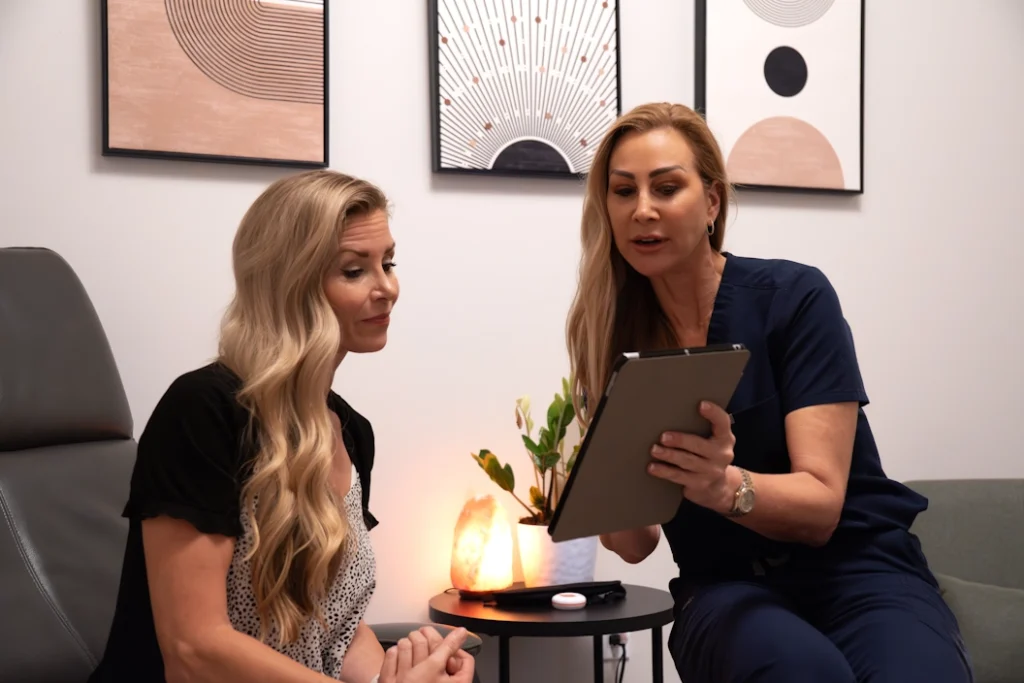
A patient listens as a staff member explains ketamine therapy at NeuPath Mind Wellness

OUR SERVICES

KETAMINE TREATMENT

Our ketamine treatment combines the highest levels of medically supervised care and safety with a warm, nurturing environment that accentuates comfort and healing. Our team will guide you through a knowledge-filled, self-discovery, and awareness journey built on trust, spirituality and connection.

SPRAVATO TREATMENT

Spravato is a nasal spray form of ketamine used to treat depression, anxiety, PTSD and suicidal ideation. Spravato is covered by insurance and provides fast relief from depression and other mental health conditions. Spravato is administered in our Delray Beach ketamine clinic under the highest standards of medically supervised care to accentuate comfort and healing. Spravato may also be combined with other services, such as TMS or psychiatric medication management

INTEGRATIVE MENTAL HEALTH AND PSYCHIATRIC SERVICES

From medication management to psychotherapy our mental health psychiatric treatment plans are end-to-end and leverage in-house services such as hormone therapy optimization, vitamin and nutrient IVs, medical weight loss, redlight/vibroacoustic therapies to optimize your results and minimize unnecessary medications. NeuPath’s mental health and psychiatric team has over 50-years of experience in diagnosing and creating specialized treatment programs for a variety of conditions.

TMS THERAPY

TMS is an innovative treatment for depression, anxiety, PTSD, and OCD that is completly medication-free. TMS directly targets areas of the brain associated with depression and mood regulation to achieve long-lasting healing. It is FDA approved with a large body of scientific research and clinical results demonstrating its powerful effectiveness at healing. TMS is typically covered by insurance.

WELLNESS THAT WORKS

woman with hand on chest

THE NEUPATH MIND WELLNESS DIFFERENCE

The innovative psychiatric treatments we offer are only part of the healing formula. Where you receive care matters almost as much as the care you receive.

Our beautiful, spa-like clinic in Delray Beach helps accelerate the healing process. The way you are greeted by our care team, and the way you are listened to intently by your care provider are important parts of the healing journey. Above all, your experience at NeuPath Mind Wellness is designed to provide you with the support and tools you need to restore your positive self.

We opened our ketamine clinic in Delray Beach to provide the type of care that has helped thousands of patients find healing from depression, anxiety, PTSD, and more. With the addition of Spravato and TMS therapy, we continue to evolve to meet our patients’ needs. Having multiple options under one roof provides you with the exact care you need from a provider you trust.

You’ll see from the moment you walk through our door that there is something different at NeuPath Mind Wellness. Please join us and see for yourself!

neupath-hero
lynne-nash-2

iNSURANCE aCCEPTED

NeuPath Mind Wellness accepts most of the major commercial medical insurance in Florida, along with Medicare and Humana Military/Tricare. We are in network with Aetna, AvMed, Blue Cross Blue Shield, Cigna, Oscar, United Healthcare, Tricare, and Medicare.

RESOURCES AND NEWS

What to Expect During Your First TMS Therapy Session

Starting any new medical treatment comes with questions. What will it feel like? How long does it take? Will it hurt? What happens if I react badly? These are completely reasonable things to wonder about, and for most people considering TMS therapy, the uncertainty around the experience itself is one of the biggest barriers to taking the first step. The good news is that TMS is one of the most straightforward treatment experiences in modern psychiatry. No anesthesia, no recovery time, no altered states, and no need to clear your schedule around it. Most patients tell us that after their first session, the main thing they feel is relief that it was so much simpler than they expected. This post walks you through exactly what happens, from the moment you arrive to the moment you leave, so there are no surprises. Before Your First Session: The Initial Evaluation TMS does not begin on the first day you walk in. Before any treatment starts, you will have a full psychiatric evaluation with one of our NeuPath clinicians. This is not a formality. It is a genuinely important step that shapes everything that follows. During this evaluation your psychiatrist will review your full psychiatric history, including previous diagnoses, medications you have tried, and how your symptoms have evolved over time. They will also screen for any contraindications to TMS, the most important of which is metal implants in or near the skull, such as cochlear implants, deep brain stimulators, or aneurysm clips. Dental fillings, braces, and joint replacements elsewhere in the body are not a concern. You do not need to fast beforehand. You do not need to stop any medications unless your psychiatrist specifically advises it. You do not need to arrange for anyone to drive you. You can come in, have the evaluation, and drive yourself home afterward exactly as you would after any other medical appointment. If you are also being considered for insurance coverage, this evaluation is where the clinical documentation that supports your prior authorization begins. Mapping Your Brain: The Motor Threshold Test On your first actual treatment session, before the coil delivers a single therapeutic pulse, your technician will perform what is called a motor threshold test. This sounds technical but is completely painless and takes only a few minutes. The motor threshold test determines the precise level of magnetic stimulation your brain responds to. Everyone’s brain is slightly different, and the dose of TMS needs to be calibrated to your individual neurology rather than applied at a fixed setting. To find your threshold, the technician positions the coil over the area of your scalp that corresponds to the motor cortex, the region that controls hand movement, and gradually increases the pulse intensity until your thumb or fingers produce a small, involuntary twitch. That twitch is the signal. It tells your technician exactly how much magnetic stimulation your brain needs to respond, and your therapeutic dose is then calculated as a percentage of that threshold. The result is a precisely personalized treatment, not a one-size-fits-all setting. This calibration is repeated periodically throughout your treatment course if your hair length changes significantly, since even a few centimeters of additional distance between the coil and your scalp can affect the dose. The Treatment Session Itself Once your threshold is mapped, the actual treatment begins. Here is what the experience looks like from start to finish. You sit in a comfortable chair. The TMS chair is reclined like a dentist’s chair but considerably more comfortable. You remain fully clothed. There is nothing to change into and nothing attached to your body. The coil is positioned against your scalp. Your technician places the TMS coil, a device roughly the size and shape of a figure-eight paddle, gently against the left side of your head. It rests on the surface of your scalp and does not apply pressure or cause any discomfort at the point of contact. The pulses begin. You will hear a rapid clicking or tapping sound as the coil activates. Simultaneously you will feel a light tapping sensation on your scalp in the area where the coil is positioned. Most patients describe it as a woodpecker-like sensation, rhythmic and localized. It is not painful for most people, though it can feel unfamiliar or slightly intense in the first couple of sessions before you adjust to it. You stay fully awake and alert. There is no sedation, no medication administered, and no altered state of any kind. You can listen to music, watch something on your phone, or simply sit quietly. Some patients use the time to meditate. Others catch up on podcasts. The session does not require your active participation beyond sitting still. The session ends. A standard TMS session runs between 19 and 37 minutes depending on the protocol being used. NeuPath also offers accelerated TMS formats including our One-Day TMS option for patients who need a compressed timeline. When the session is complete, the coil is removed, you stand up, and you leave. That is the full experience. What You Might Feel During the Session The most common sensations during TMS are: Scalp tapping. The magnetic pulses create a rhythmic tapping feeling on the skin directly under the coil. This is the most universal part of the experience and diminishes noticeably after the first week as your scalp adjusts. Jaw or facial muscle movement. Some patients notice subtle, involuntary twitching in the jaw or facial muscles during certain pulse sequences. This is normal, harmless, and typically reduces as the technician fine-tunes the coil position. A mild headache. Some patients, particularly in the first few sessions, develop a light tension headache that resolves within an hour or so after the session. Over-the-counter pain relief works fine if needed. This side effect tends to fade after the first week. What you will not feel: dizziness, nausea, sedation, cognitive impairment, or anything that would prevent you from driving, working, or carrying on with your day. TMS has no

MORE
Spravato vs. Ketamine Infusions: Which is Right for You?

If you have been researching advanced treatments for depression, you have probably come across both Spravato and ketamine infusions. They sound similar, they are chemically related, and they are often mentioned in the same breath. But they are not the same treatment, and the differences between them matter a great deal when it comes to choosing what is right for your situation. This post breaks down exactly how Spravato and ketamine infusions compare, where each one has the advantage, and how to think through the decision. What They Have in Common Both Spravato and ketamine infusions work through the same basic mechanism. They both target NMDA receptors in the brain and trigger a rapid increase in glutamate signaling, which promotes the growth of new synaptic connections in areas of the brain associated with mood and emotional regulation. This is why both treatments can produce antidepressant effects far faster than traditional medications, sometimes within hours of the first session. Both are administered in a supervised clinical setting. Neither is a take-home medication. Both are primarily used for patients who have not responded adequately to standard antidepressants. And both are available at NeuPath Mind Wellness across our South Florida locations. That is largely where the similarities end. What Is Spravato? Spravato is the brand name for esketamine, a nasal spray form of ketamine that was developed specifically for depression and received FDA approval in 2019. It is the first genuinely new class of antidepressant the FDA has approved in decades. Spravato is administered as a nasal spray in a clinical setting. You self-administer the spray under the supervision of a healthcare provider, then remain in the clinic for a two-hour observation period. You cannot drive yourself home afterward. Sessions are typically twice weekly for the first month, then weekly, then every one to two weeks as a maintenance dose. Because Spravato is FDA-approved specifically for treatment-resistant depression and, more recently, for major depressive disorder with acute suicidal ideation, it has a well-established insurance coverage pathway. Most major insurers cover it under similar criteria to TMS. What Are Ketamine Infusions? IV ketamine infusions use the full racemic form of ketamine, delivered directly into the bloodstream through an intravenous line over approximately 40 to 60 minutes. Ketamine has been used as an anesthetic for decades and is used off-label for depression, meaning its use for mood disorders is not FDA-approved for that specific indication, even though the clinical evidence supporting it is extensive. During an infusion, most patients experience a dissociative state, a dreamlike, floaty feeling that typically lasts for the duration of the session and resolves shortly after. The infusion is monitored closely by clinical staff throughout. Afterward, patients need a recovery period and cannot drive themselves home. A standard course for depression is typically six infusions over two to three weeks, followed by maintenance infusions as needed. How They Compare: The Key Differences This is the most practically significant difference for most patients. Does Insurance Cover Spravato? Spravato is covered by insurance. Because it is FDA-approved for treatment-resistant depression, most major insurers including Aetna, Blue Cross Blue Shield, Cigna, UnitedHealthcare, and Medicare have established coverage policies for it. The standard requirement is a diagnosis of treatment-resistant depression and a documented history of failed antidepressant trials, criteria most patients seeking this level of treatment already meet. Does Insurance Cover Ketamine Infusions? IV ketamine is generally not covered by insurance. Because it is used off-label, insurers do not have formal coverage policies for it. A full course of six infusions typically costs several thousand dollars out of pocket. Which Is More Cost-Effective? If cost and insurance coverage are significant factors in your decision, Spravato has a clear and meaningful advantage. The Molecule Spravato uses esketamine, which is one half of the ketamine molecule, specifically the S-enantiomer. IV ketamine uses the full racemic mixture, meaning it contains both the S and R forms of the molecule. The R-enantiomer in racemic ketamine may contribute additional antidepressant effects that esketamine alone does not produce, which is one reason some clinicians believe IV ketamine may have a clinical edge in certain patient populations. The research on this is still evolving. The Experience Spravato is a nasal spray. The dissociative experience it produces is generally milder than that of IV ketamine, though it varies by patient. The two-hour observation window is required regardless of how you feel. IV ketamine produces a more pronounced dissociative effect for most patients. Some find this deeply therapeutic. Others find it uncomfortable. Because the drug is delivered directly into the bloodstream, the onset is faster and the peak experience more intense than with Spravato. Speed of Onset Both treatments are fast-acting compared to oral antidepressants. IV ketamine may produce a slightly faster and more intense initial response due to the direct intravenous delivery and the full racemic formulation. Spravato’s effects are meaningful but the onset curve is somewhat gentler for most patients. Dosing Flexibility IV ketamine allows for more precise, individualized dosing. Because the infusion rate and concentration can be adjusted in real time, clinicians can titrate the dose based on the patient’s response, weight, and tolerance. Spravato comes in fixed doses of 56mg and 84mg, which limits that level of personalization. The Clinical Setting Both require clinical supervision and a period of observation. Spravato’s two-hour window is longer than a typical ketamine infusion visit when you factor in recovery time, though the total time commitment across a treatment course is comparable. What the Research Says Both treatments have solid clinical evidence behind them. Spravato’s approval was based on pivotal trials demonstrating significant reduction in depressive symptoms in treatment-resistant patients within 24 hours of the first dose. IV ketamine’s evidence base is even longer-standing, with dozens of well-designed studies consistently showing rapid antidepressant effects. Head-to-head comparisons between the two are limited, and the existing research does not definitively establish one as superior to the other for all patients. The practical differences, particularly around insurance coverage, dosing flexibility, and the in-session experience, tend to

MORE
Is TMS Therapy Covered by Insurance in Florida?

One of the first questions patients ask when they learn about TMS therapy is whether their insurance will cover it. It is a reasonable question, and the answer is better than most people expect. Yes, TMS therapy is covered by insurance for many patients in Florida. Most major insurance plans, including Medicare, cover TMS for treatment-resistant depression, and NeuPath Mind Wellness handles the verification and prior authorization process on your behalf so you are not navigating it alone. Here is everything you need to know about how TMS insurance coverage works, which plans cover it, and what to do if you are not sure whether your plan qualifies. Why Insurance Covers TMS TMS has a distinct advantage over ketamine infusion therapy when it comes to insurance: it is not an off-label treatment. TMS received its first FDA approval for depression in 2008, and the evidence base has grown considerably since then, with additional approvals for OCD, anxious depression, and smoking cessation following in subsequent years. Because TMS is FDA-approved specifically for depression and has a well-established clinical track record, insurance companies have established formal coverage policies for it. This is fundamentally different from IV ketamine, which is used off-label for depression and therefore not covered by insurance. Spravato, the FDA-approved nasal spray form of esketamine, is similarly covered by insurance for the same reason that TMS is: formal FDA approval for the specific condition being treated. If cost has been a barrier to exploring TMS, the insurance coverage picture is worth revisiting. Which Insurance Plans Cover TMS in Florida? Coverage policies vary by plan, but TMS is covered by most major commercial insurers as well as Medicare. Plans that commonly cover TMS include: If your plan is not on this list, it does not necessarily mean you are without coverage. Many additional plans cover TMS either as an in-network or out-of-network benefit. Contact our office at 561-847-3662 and our team will verify your specific plan directly. TMS at NeuPath Mind WellnessNeuPath Mind Wellness offers TMS therapy at all three of our South Florida locations in Delray Beach, Boca Raton, and Boynton Beach. We accept most major insurance plans and work directly with insurers to handle prior authorization before your treatment begins. If you have been living with depression and antidepressants have not given you the relief you were hoping for, TMS may be covered by your insurance and available sooner than you think. Our team is here to help you figure that out. Call us at 561-847-3662 or book a free consultation online to verify your coverage today.

MORE

SCHEDULE A CONSULTATION

Visit our flagship center in Delray Beach, Florida.  Fill out the form below to book with us.